
Peptides vs Retinol: Which Is Better, and Can You Use Both?
Peptides vs retinol: how each works, which suits your skin, and how to use peptides and retinol together without irritation.
Peptides vs retinol, in short: peptides are short chains of amino acids that signal skin to look firmer, smoother, and more even, with little to no irritation, so you can use them morning and night, every day. Retinol is a form of vitamin A that speeds up cell turnover. It has a long research history for fine lines, but dryness, peeling, and sun sensitivity make it hard for many people to stick with. For most people, peptides are the easier everyday choice, and if you already love retinol, peptides pair with it well.
This guide covers how each one works, what the studies show, which suits your skin, and exactly how to use peptides and retinol in the same routine.
Peptides vs Retinol at a Glance
| Peptides | Retinol | |
|---|---|---|
| What it is | Short chains of amino acids, the same building blocks that make up collagen | A form of vitamin A (a retinoid) |
| How it works | Targeted signals that support collagen, soften the look of expression lines, or calm skin | Speeds up cell turnover and supports collagen |
| Best for | Firmness, fine lines, expression lines, plumpness, sensitive or reactive skin | Rough texture, fine lines, breakouts |
| Irritation | Rare. Most skin types tolerate peptides well | Common: dryness, peeling, redness, stinging |
| Adjustment period | None for most people | Often several weeks of "retinization" |
| Sun sensitivity | No | Yes. Daily SPF is a must |
| When to use | Morning, evening, or both | Evening only |
| Layers with other actives | Pairs with most routines | Clashes with acids, benzoyl peroxide, and some vitamin C serums |
| Time to see results | 4 to 12 weeks | 8 to 12 weeks, often after a rough start |
| Pregnancy | Ask your doctor about the specific product | Generally avoided |
Is retinol a peptide? No. Retinol is a vitamin A derivative, not a peptide. They are different ingredient families that work in different ways, which is why they pair well.
What Retinol Does for Skin
Retinol is a retinoid, part of the vitamin A family that also includes prescription tretinoin. Once on the skin, it converts to retinoic acid, which tells skin cells to renew faster and helps support collagen.
It has a long research history. In a 24-week, double-blind study, 0.4% retinol significantly improved fine wrinkles on aged skin compared with a plain lotion, and biopsies showed more collagen in treated skin (Kafi et al., 2007).
The trade-off is irritation. Retinol often causes dryness, flaking, redness, and stinging in the first weeks (sometimes called "retinization"), and it makes skin more sensitive to the sun. Many people quit before they see results.
What Peptides Do for Skin
Peptides are short chains of amino acids. In skincare they act like messengers: each type sends a specific signal. Researchers group cosmetic peptides into four main types (Gorouhi and Maibach, 2009):
Signal peptides (like Matrixyl) tell skin to make more collagen, for a firmer, smoother look.
Neurotransmitter-inhibiting peptides (like Argireline and SNAP-8) soften the look of expression lines such as forehead lines and crow's feet.
Carrier peptides (like copper peptide) deliver trace minerals that skin uses in repair and renewal.
Enzyme-inhibiting peptides slow the breakdown of collagen.
Do Peptides Actually Work for Wrinkles?
Yes. Several peptides have been tested in controlled studies on real skin:
Matrixyl (palmitoyl pentapeptide): in a 12-week, double-blind, split-face study of 93 women aged 35 to 55, it significantly reduced wrinkles and fine lines compared with placebo, and was well tolerated (Robinson et al., 2005).
Argireline (acetyl hexapeptide): a cream with 10% reduced wrinkle depth by up to 30% after 30 days (Blanes-Mira et al., 2002). SNAP-8 is a longer version of the same peptide.
Copper peptide: small studies report firmer, denser-looking skin and fewer fine lines over 12 weeks.
Why named peptides matter: results depend on which peptides are in the formula. A label that only says "peptide complex" tells you very little. Every ProGlow serum names its peptides, from SNAP-8 and nonapeptide-1 in Glass Skin to KPV and copper peptide in Recovery.
Which Is Better for Aging Skin, Peptides or Retinol?
For most people, peptides. Retinol has a longer research history, but anti-aging results come from using an ingredient every day for months, and that is where peptides have the edge. They target firmness and lines without the dryness, peeling, and sun sensitivity that make many people give up on retinol in the first few weeks.
Choose peptides if:
You want firmer, smoother-looking skin without irritation or downtime.
Your skin is sensitive, reactive, or prone to redness.
Retinol has irritated you before, or you gave up on it.
Your main concern is firmness, plumpness, or expression lines like forehead lines and crow's feet.
You want one product you can use morning and night.
You are in your 20s or 30s and want to start early, gently.
Consider adding retinol if:
Your main concern is rough texture or breakouts.
Your skin tolerates strong actives and you are ready for an adjustment period.
You are not pregnant, trying to conceive, or breastfeeding.
Use both if you already use retinol and want more firmness and comfort. Peptides fill the gaps retinol leaves: they support firmness and help offset some of retinol's dryness.
Peptides vs Retinol for Wrinkles
Peptides give you more ways to target wrinkles. Neurotransmitter-inhibiting peptides like Argireline and SNAP-8 work on expression lines, the ones that form when you move your face, which retinol does not target directly. Signal peptides like Matrixyl support collagen for fine lines, with placebo-controlled results over 12 weeks. Retinol's main strength is resurfacing rough texture.
Peptides vs Retinol for Sagging Skin
Neither one lifts skin the way a procedure does. Peptides are the more targeted option: signal and copper peptides send collagen-supporting signals for a firmer, bouncier look, without irritation. Retinol supports collagen through cell turnover. A collagen cream is not a shortcut: collagen molecules are too large to soak into skin, so they mostly work as moisturizers. Peptides help skin support its own collagen instead.
Peptides in Your 30s
Your 30s are an ideal time to start a peptide routine. Peptides are an easy first active: no adjustment period, no peeling, and they work morning and night. A peptide serum like Glass Skin plus a peptide moisturizer is a complete firming routine on its own. If you want to add retinol later, start with two nights a week.
Why Peptides Are Easier to Stick With
The best anti-aging routine is the one you actually use. Peptides make that easier:
No adjustment period. No weeks of flaking while your skin gets used to it.
Day and night. Peptides do not make skin more sun-sensitive, so they fit your morning routine too (still wear SPF).
Gentle on reactive skin. Peptides suit skin that stings with stronger actives.
Layer-friendly. They pair with niacinamide, hyaluronic acid, ceramides, and even retinol.
Multi-tasking formulas. Different peptides do different jobs, so one serum can target firmness, lines, and comfort at once.
Can You Use Peptides and Retinol Together?
Yes. Peptides and retinol can be used together, and they are a good match. Retinol supports cell turnover while peptides support firmness and help offset some of retinol's dryness. There is no chemical conflict between them.
There are three common ways to combine them. Pick based on how your skin handles retinol.
Option 1: Same Night, Layered (Skin Used to Retinol)
Cleanse and let skin dry fully.
Apply retinol (a pea-sized amount for the whole face).
Wait a few minutes.
Apply your peptide serum.
Finish with moisturizer.
Option 2: Peptides in the Morning, Retinol at Night (Most People)
This is the simplest routine and the easiest on skin.
Morning: cleanser, peptide serum, moisturizer, SPF.
Evening: cleanser, retinol, moisturizer.
Option 3: Alternate Nights (Sensitive or New to Retinol)
Retinol nights (2 to 3 a week): cleanser, retinol, moisturizer.
Peptide nights: cleanser, peptide serum, moisturizer.
Increase retinol nights slowly as your skin adjusts.
Should I Use Retinol or Peptides First?
The usual rule is thinnest to thickest. Most retinol serums are thin, so they go on first, directly on clean, dry skin where they can work, followed by your peptide serum and then moisturizer. If your retinol is a cream, apply your peptide serum first and the retinol cream after it. If your skin gets irritated, you can also "buffer" by applying moisturizer first and retinol on top, which softens the effect.
Can You Use Copper Peptides With Retinol?
Yes. Copper peptides and retinol can share a routine. If your skin is sensitive, start by alternating nights, then layer them once your skin is comfortable: retinol first, then copper peptide, then moisturizer. Keep copper peptides away from separate vitamin C products and strong acids (see the table below).
What Not to Mix With Retinol or Peptides
| Combination | Why | What to do |
|---|---|---|
| Retinol + AHAs or BHAs (glycolic, salicylic) | Too much exfoliation at once, more irritation | Use acids and retinol on different nights |
| Retinol + benzoyl peroxide | Irritating together, and benzoyl peroxide can break down some retinoids | Use at different times of day |
| Retinol + strong vitamin C serum | Irritation for many people | Vitamin C in the morning, retinol at night |
| Copper peptide + vitamin C (separate products) | Copper can speed up vitamin C breakdown | Vitamin C in the morning, copper peptide at night |
| Peptides + strong acids | Low pH may make some peptides less stable | Use acids on their own nights |
| Peptides + retinol | No conflict | Layer or split by morning and night |
| Peptides + niacinamide, hyaluronic acid, ceramides | No conflict | Layer freely |
Whatever you use, wear broad-spectrum SPF every morning. Retinol makes skin more sun-sensitive, and sun exposure undoes the work of both ingredients.
Can Peptides Replace Retinol?
For many people, yes. If retinol irritates your skin, or you simply want firming results without the adjustment period, a well-built peptide routine is a strong alternative. Pairing peptides with bakuchiol, as Daily Lift does, covers even more ground. Avoiding retinoids during pregnancy or breastfeeding? Ask your doctor which products suit you.
Another option is bakuchiol, a plant extract often called a "retinol alternative." In a 12-week, randomized, double-blind study of 44 people, 0.5% bakuchiol twice daily and 0.5% retinol once daily both significantly reduced wrinkle surface area and dark spots, with no statistical difference between them. The retinol group reported more scaling and stinging (Dhaliwal et al., 2019). That is one small study, but it is a promising one.
What Do Koreans Use Instead of Retinol?
Korean skincare (K-beauty) tends to favor gentler daily ingredients over strong retinoids. Common choices include peptides, bakuchiol, PDRN (salmon DNA), snail mucin, centella asiatica, and niacinamide, used consistently and layered for hydration. The goal is the smooth, plump "glass skin" look without the irritation.
ProGlow Peptide Serums for Every Routine
Every ProGlow formula is built around named peptides, paired with supporting actives that keep skin comfortable. We do not make a retinol: our serums are designed to give you a complete firming routine without one, or to sit alongside one.
Glass Skin: Our Flagship Peptide Serum for Lines and Plumpness
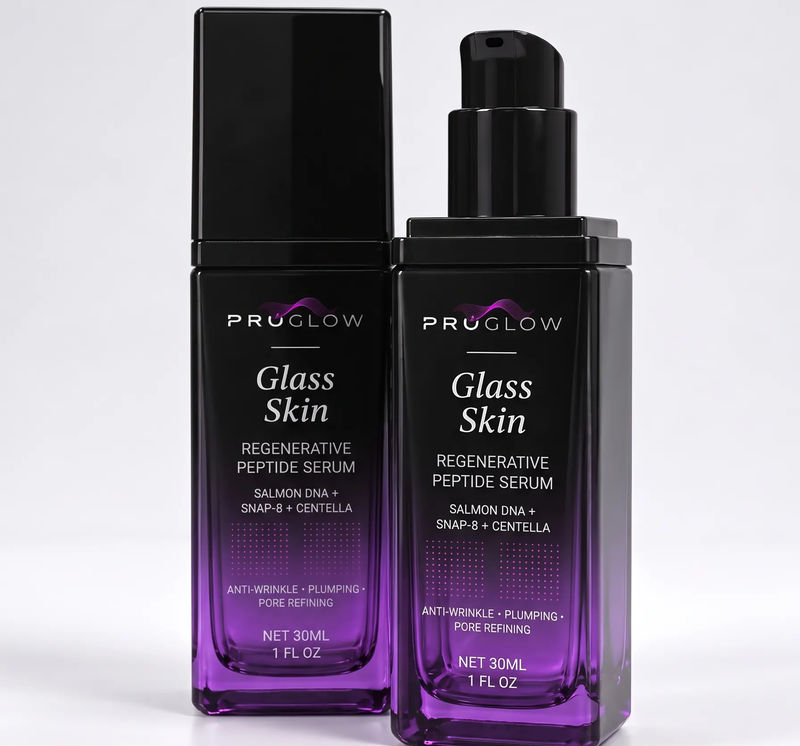
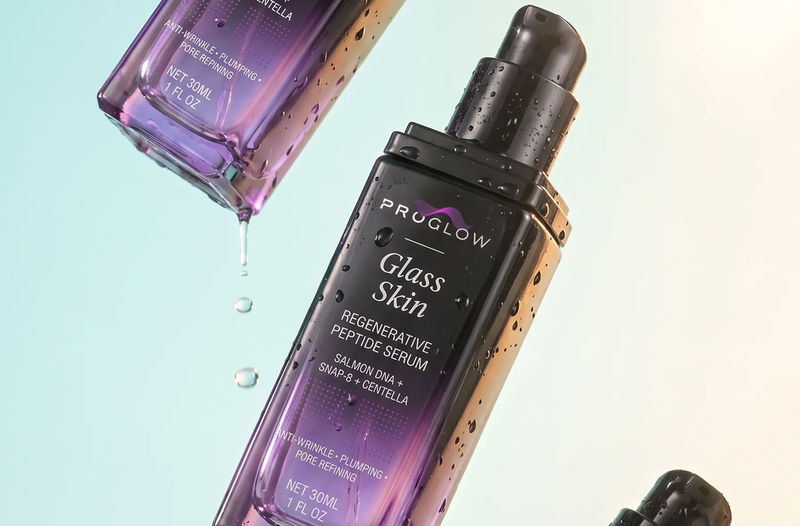
Glass Skin combines SNAP-8, nonapeptide-1, and copper peptide with PDRN (salmon DNA) and centella. SNAP-8 softens the look of expression lines, copper peptide supports a firmer, bouncier look, and PDRN brings the plump, glassy finish K-beauty is known for. Use it morning and night, under moisturizer.
Daily Lift: The Gentle Retinol Alternative
Daily Lift pairs 2% bakuchiol, the plant-based retinol alternative, with a peptide complex, copper peptide, 3% stabilized vitamin C, 4% niacinamide, and ferulic acid. It targets fine lines, dark spots, and dullness in one step. Use it morning and night, with SPF in the morning.
Recovery: Calm, Comfortable Skin
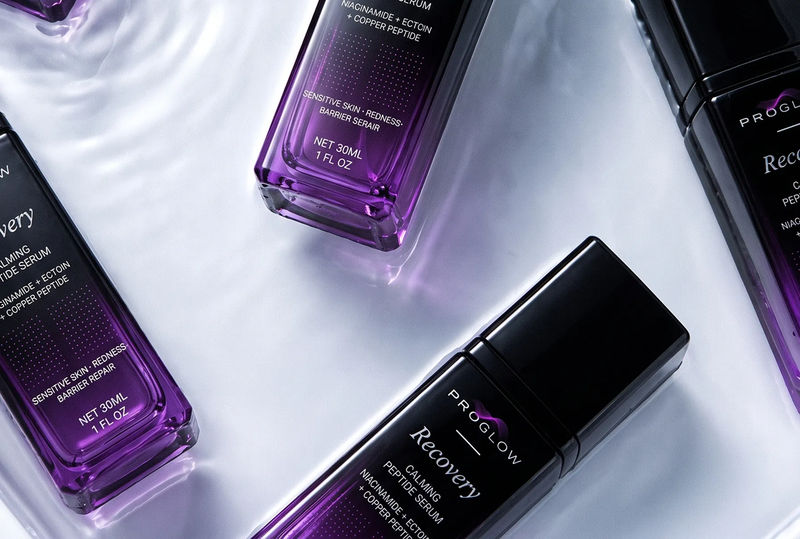
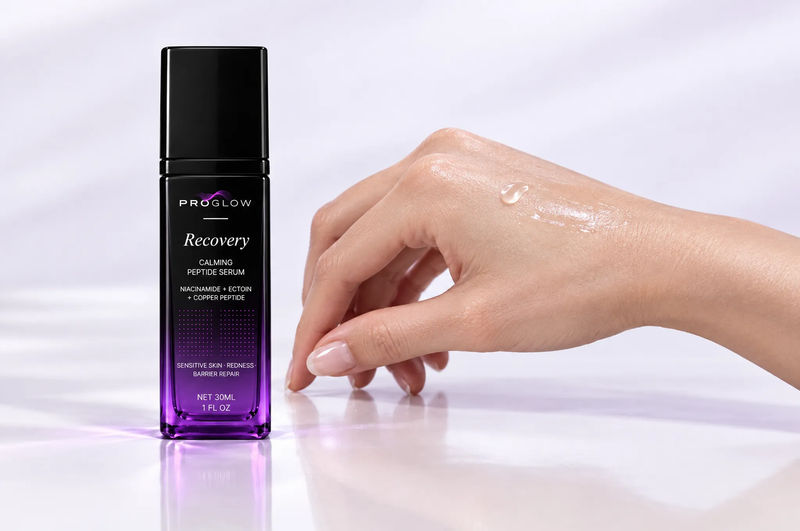
Recovery is our calming peptide serum, with KPV and copper peptide plus 5% niacinamide, 3% ectoin, and 2% panthenol. It suits sensitive and redness-prone skin, and it is a natural fit for nights off retinol if you use one. Use it in the evening.
Daily Renew: The Peptide Moisturizer That Seals It In
Daily Renew is a 5-peptide hydration cream with Matrixyl Synthe'6, SNAP-8, copper peptide, 15% snail mucin, and ceramides. Use it as the last step, morning and night, to lock in your serum and support your skin barrier.
| Product | Key actives | Best for | When |
|---|---|---|---|
| Glass Skin | SNAP-8, nonapeptide-1, copper peptide, PDRN | Expression lines, plumpness, pores | AM and PM |
| Daily Lift | 2% bakuchiol, peptide complex, copper peptide, 3% vitamin C, 4% niacinamide | Fine lines, dark spots, brightness | AM and PM |
| Recovery | KPV, copper peptide, 5% niacinamide, 3% ectoin, 2% panthenol | Sensitive, redness-prone skin | PM |
| Daily Renew | Matrixyl Synthe'6, SNAP-8, copper peptide, 15% snail mucin, ceramides | Dry skin, firmness | AM and PM, last step |
Peptide Routines, With or Without Retinol
The peptide routine (no retinol needed):
Morning: cleanser, Daily Lift, Daily Renew, SPF.
Evening: cleanser, Glass Skin, Daily Renew.
Sensitive nights: swap Glass Skin for Recovery.
If you also use retinol:
Morning: cleanser, Glass Skin, Daily Renew, SPF.
Evening (retinol nights): cleanser, retinol, Daily Renew.
Evening (off nights): cleanser, Recovery, Daily Renew.
Daily Lift already contains bakuchiol and vitamin C, so if you also use retinol, keep Daily Lift in the morning and retinol at night.
How to Choose a Peptide Serum to Use With Retinol
Named peptides. Look for specific names like Matrixyl, SNAP-8, Argireline, or copper peptide, not just "peptide complex."
Barrier support. Niacinamide, ceramides, panthenol, and hyaluronic acid help offset retinol dryness.
No extra exfoliants. Skip peptide serums that also contain strong acids if you use retinol.
For a full breakdown of peptide types and what to look for, read our peptide serum guide, or compare options in the best peptide serums.
FAQ
Is it better to use peptides or retinol?
For most people, peptides. They support firmer, smoother-looking skin with little to no irritation and can be used morning and night, which makes them easier to use consistently. Retinol has a longer research history and suits texture and breakouts, but it often causes dryness and peeling. If your skin tolerates retinol, using both works well.
Can I use peptides and retinol together?
Yes. Peptides and retinol do not conflict and work well together. Use a peptide serum in the morning and retinol at night, or layer them at night with retinol first, then peptides, then moisturizer.
Should I use peptides or retinol first?
Apply retinol first on clean, dry skin, then your peptide serum, then moisturizer. If your retinol is a thick cream, apply the peptide serum first. If you are sensitive, put moisturizer on before retinol to buffer it.
Can I use a peptide serum with retinol every night?
Yes, if your skin tolerates retinol nightly. If you are new to retinol, use it 2 to 3 nights a week and use your peptide serum on the other nights, then build up.
Is retinol a peptide?
No. Retinol is a form of vitamin A. Peptides are chains of amino acids. They are different ingredients that work in different ways.
Can peptides replace retinol?
For many people, yes. Peptides support firmness and soften the look of lines without retinol's irritation. Pairing them with bakuchiol, a plant-based retinol alternative, adds another layer of support.
Do peptides help with retinol irritation?
Peptide serums are usually well tolerated, and formulas with niacinamide, ceramides, or panthenol can help skin feel more comfortable during the retinol adjustment period. They do not cancel out irritation, so still start retinol slowly.
Are copper peptides better than retinol?
They do different jobs. Copper peptides support a firmer, more resilient look without irritation, so they are easier to use every day. Retinol is stronger on rough texture. Many people use copper peptides on nights they skip retinol.
Which is better for saggy skin, retinol or collagen?
Neither collagen nor retinol is the best first pick. Collagen in creams is too large to soak into skin, so it mostly acts as a moisturizer. Signal and copper peptides help skin support its own collagen without irritation, and retinol can add to that if your skin tolerates it.
Build your routine: pair evening retinol with Glass Skin in the morning, try Daily Lift as a gentler retinol alternative, or browse all peptide serums.

