Peptide Serum Guide: Benefits, Types, and How to Choose
What does a peptide serum do? Learn the benefits, the 5 main peptide types, how to layer one, and why concentration decides whether you see results.
If you've scrolled through skincare TikTok or browsed the aisles at Sephora lately, you've probably noticed peptides are having a moment. But unlike fleeting trends like snail mucin or jade rollers, peptide serums are backed by decades of dermatological research, and for good reason. These tiny amino acid chains are quietly rewriting the rules of anti-aging skincare, offering a science-backed alternative to needles, lasers, and invasive procedures.
But here's the catch: not all peptide serums are created equal. In fact, most of the "peptide-infused" products flooding the market contain concentrations so low they're essentially placebo. If you're investing in peptide skincare, you need to know what actually works and what's just clever marketing.
In this guide, we're breaking down everything you need to know about peptide serums, from how they signal your skin cells to the red flags that separate clinical-grade formulas from overpriced water.
What are peptides, really?
Peptides are short chains of amino acids, the building blocks of proteins like collagen, elastin, and keratin. Think of them as tiny messengers that travel through your skin, instructing cells to perform specific tasks: produce more collagen, calm inflammation, repair damage, or even relax muscle contractions that cause wrinkles.
Your skin naturally produces peptides as part of its repair and maintenance systems. But here's the problem: peptide production declines with age, sun exposure, pollution, and stress. By your 30s, your skin is producing significantly fewer of these signaling molecules, which is why you start noticing fine lines, sagging, and slower healing.
Topical peptide serums work by replenishing these messengers, essentially "reminding" your skin how to behave like younger, healthier tissue. Unlike surface-level ingredients like hyaluronic acid (which hydrates) or vitamin C (which brightens), peptides work at the cellular level to trigger biological responses.
The different types of peptides (and what they do)
Not all peptides are interchangeable. Each type targets specific skin concerns by interacting with different cellular pathways. Here are the most clinically proven peptides you'll find in high-quality serums:
1. Signal peptides
What they do: Stimulate collagen, elastin, and glycosaminoglycan (GAG) production.Best for: Wrinkles, loss of firmness, thin or crepey skin.Example: GHK-Cu (Copper Tripeptide-1), Palmitoyl Tripeptide-38 (Matrixyl Synthe'6)
2. Neurotransmitter-inhibiting peptides
What they do: Interfere with muscle contraction signals to soften expression lines.Best for: Forehead lines, crow's feet, and frown lines (any wrinkle caused by repeated facial movement).Example: SNAP-8 (Acetyl Octapeptide-3), Argireline (Hexapeptide-8)
3. Carrier peptides
What they do: Deliver trace elements (like copper) deep into skin to accelerate repair and collagen synthesis.Best for: Post-procedure recovery, wound healing, UV damage repair.Example: GHK-Cu (yes, it's both a signal AND carrier peptide)
4. Enzyme-inhibiting peptides
What they do: Block enzymes that break down collagen (like collagenase).Best for: Preventing wrinkle formation, maintaining existing collagen.Example: Soybean peptides, rice peptides
5. Antimicrobial peptides
What they do: Target acne-causing bacteria while preserving skin's microbiome balance.Best for: Acne-prone skin, inflamed breakouts, congested pores.Example: LL-37 (Cathelicidin)
How peptide serums actually work
Here's what happens when you apply a peptide serum to your skin:
Step 1: Penetration
High-quality peptide serums use delivery systems (like liposomal encapsulation or low molecular weight formulations) to help peptides penetrate through the stratum corneum (your skin's outermost barrier).
Step 2: Cellular recognition
Once in the deeper layers of skin, peptides bind to specific receptors on cell surfaces, like a key fitting into a lock.
Step 3: Signal activation
This binding triggers a cascade of biological responses. For example, GHK-Cu activates TGF-β signaling, which tells fibroblasts (collagen-producing cells) to ramp up production.
Step 4: Visible results
Over 4-8 weeks of consistent use, you'll notice smoother texture, reduced wrinkle depth, improved firmness, and enhanced skin quality. Peptides work progressively, not instantly, because they're triggering your skin's natural repair processes.
The concentration problem (why most peptide serums don't work)
Here's the dirty secret of the skincare industry: most "peptide serums" contain concentrations far too low to trigger meaningful cellular responses.
Clinical studies showing peptide efficacy typically use concentrations between 2-10%. Yet many mass-market products contain less than 0.01%, just enough to list "peptides" on the ingredient label without delivering results.
Why? Because pharmaceutical-grade peptides are expensive. A brand can either:
Use clinical concentrations and charge $80-$150 per bottle
Use trace amounts, add fillers, and sell for $25 with clever marketing
Red flags that a peptide serum is underdosed
Peptides are listed near the bottom of the ingredient list (after preservatives)
The brand doesn't disclose peptide concentrations
Price point is suspiciously low ($20-$40 for a full-size serum)
Marketing focuses on "infused with peptides" rather than clinical evidence
What to look for instead
Peptides listed in the top 5-7 ingredients
Brands that disclose concentrations (e.g., "10% SNAP-8")
Pharmaceutical-grade sourcing (peptides from certified suppliers, not cosmetic-grade vendors)
Price that reflects ingredient cost ($60-$150 range for a 30ml bottle)
How to choose the right peptide serum for your skin concern
If you want to smooth wrinkles and expression lines
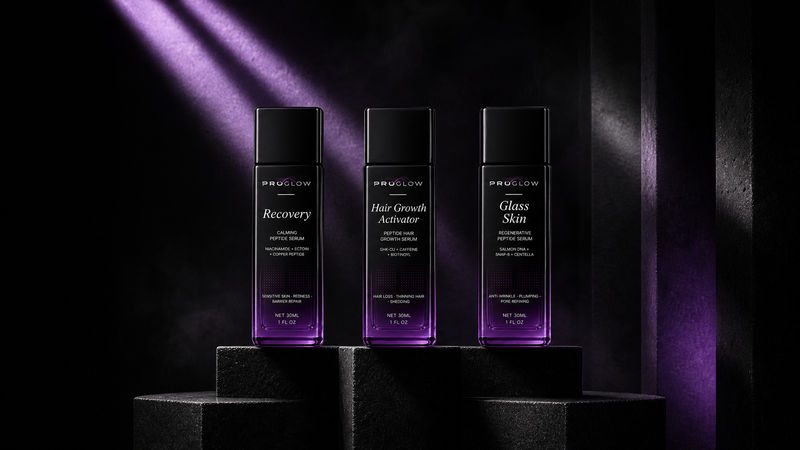
Look for: SNAP-8, Argireline, SYN-AKE (neurotransmitter-inhibiting peptides)Use: Twice daily on forehead, crow's feet, smile linesResults timeline: 4-6 weeks for visible smoothingTry: Glass Skin, our flagship serum built around SNAP-8 and PDRN
If you want to firm sagging skin and rebuild collagen
Look for: GHK-Cu, Palmitoyl Tripeptide-38, Matrixyl 3000Use: Nightly on face, neck, and jawlineResults timeline: 6-8 weeks for improved firmnessTry: Daily Lift, a firming serum with copper peptide and bakuchiol
If you have sensitive, reactive, or rosacea-prone skin
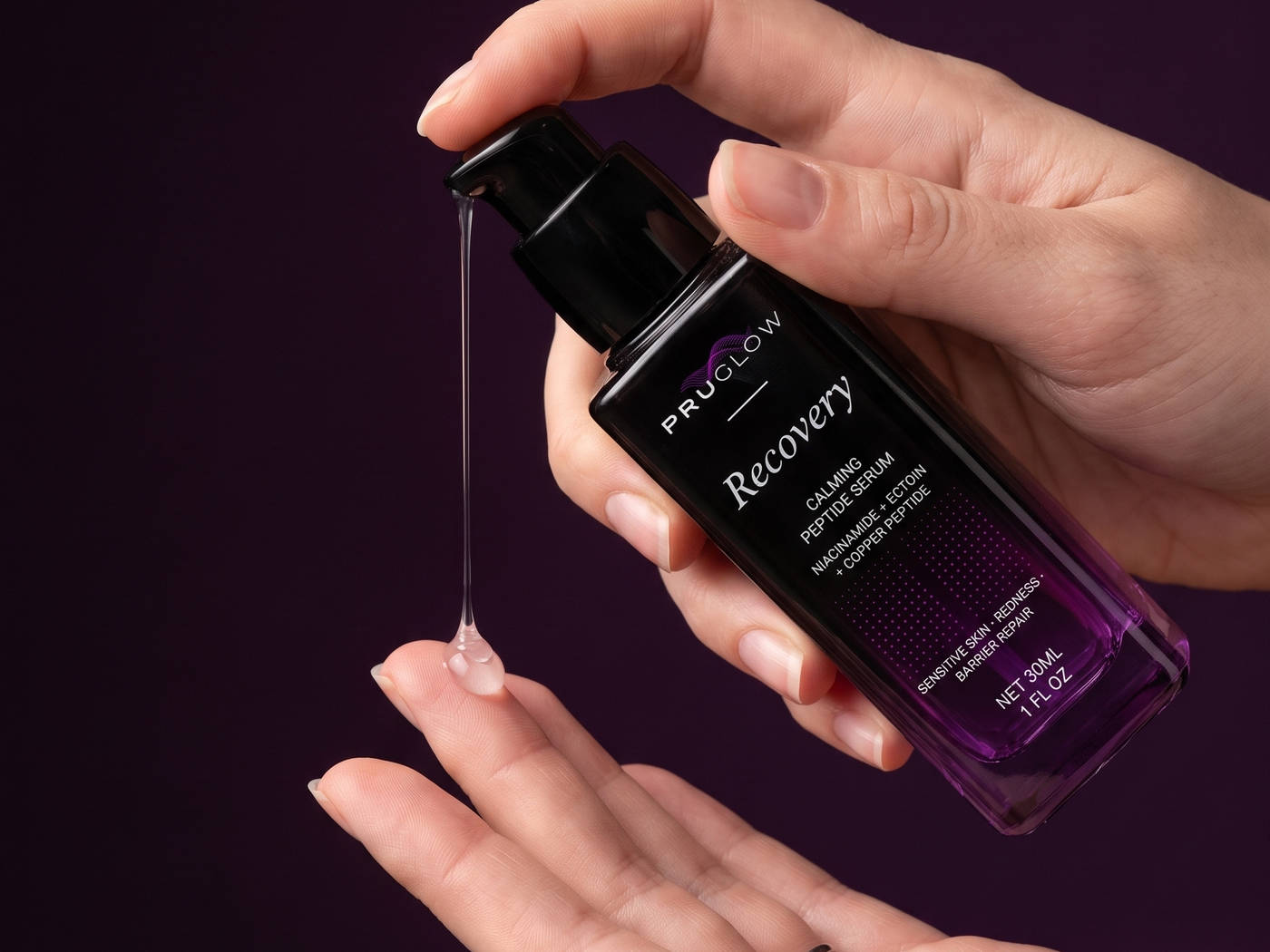
Look for: KPV (anti-inflammatory peptide), Tetrapeptide-30Use: Twice daily as a calming treatmentResults timeline: 2-4 weeks for reduced rednessTry: Recovery, a calming serum with copper peptide, niacinamide, and ectoin
If you're dealing with acne or congested pores
Look for: LL-37 (antimicrobial peptide), Copper PeptidesUse: 2-3 times weekly as a targeted treatmentResults timeline: 3-4 weeks for clearer skin
If you want prevention (you're in your 20s-30s)
Look for: GHK-Cu, Matrixyl complexes (signal peptides)Use: Nightly to maintain collagen productionResults timeline: Long-term prevention, no immediate "results"
How to layer peptide serums in your routine
The golden rule: apply peptides on clean skin before heavier creams or oils, and allow 60 seconds for absorption between products.
Morning routine
Cleanser
Toner (optional)
Peptide serum
Wait 60 seconds
Moisturizer
SPF (non-negotiable: peptides increase collagen production, but UV destroys it)
Evening routine
Cleanser
Toner (optional)
Optional: Retinoid (apply first, wait 5 minutes)
Peptide serum
Wait 60 seconds
Facial oil or night cream
Can you use multiple peptide serums?
Yes! ProGlow serums are designed to be layered. Apply from thinnest to thickest consistency.
What not to mix with peptides
High-strength acids (AHA/BHA): use on alternate nights
Pure vitamin C (L-ascorbic acid): can degrade certain peptides, so use them in separate routines (morning vs. evening)
Peptide serums vs. injectable treatments: the honest comparison
Can peptide serums replace Botox or fillers? The short answer: not exactly. But they offer something injectables can't.
What injectables do
Paralyze muscles (Botox) or physically fill wrinkles (dermal fillers)
Instant, dramatic results
Require maintenance every 3-6 months
Cost $300-$1,200 per session
Come with risks: bruising, swelling, frozen appearance, vascular occlusion (rare but serious)
What peptide serums do
Signal your skin to produce its own collagen and repair mechanisms
Progressive results over 4-8 weeks
Improve overall skin quality (texture, elasticity, barrier function)
Cost $60-$150 for 3+ months of use
Zero downtime, no needles, natural facial expression
Who should choose peptide serums
Prevention-focused individuals (20s-30s)
Those hesitant about needles or invasive procedures
People maintaining results between injectable appointments
Anyone wanting holistic skin improvement beyond just wrinkle-freezing
Who might still need injectables
Deep, etched wrinkles that require volume restoration
Severe sagging that requires structural support
Those seeking instant results for an event
The bottom line: are peptide serums worth it?
If you buy a clinical-grade formula with proven concentrations, absolutely. Peptides are one of the few "anti-aging" ingredients with decades of peer-reviewed research backing their efficacy.
But if you're reaching for a $25 "peptide serum" at Target, you're likely wasting your money. The difference between a peptide product that works and one that doesn't comes down to three things:
Concentration: 2-10% is the clinical standard
Purity: Pharmaceutical-grade sourcing matters
Formulation: Stability, pH, and delivery systems determine whether peptides reach living cells or break down in the bottle
At ProGlow, we don't cut corners. Our serums contain pharmaceutical-grade peptides at concentrations proven effective in dermatological studies, formulated by Certified Peptide Therapy Experts who understand cellular signaling pathways, not just marketing buzzwords.
Because when you're investing in your skin, you deserve ingredients that actually work.
Ready to experience clinical-grade peptides?
Explore ProGlow's peptide serum collection, formulated with the concentrations and purity your skin deserves.

