Where to Buy KPV Peptide Cream and Serum (2026)
Where to buy KPV peptide cream or serum made for skin, not research powder. What KPV does, cream vs serum, a buying checklist, and realistic results.
If you search for KPV peptide cream or serum, most of what comes back is research-grade KPV powder sold in vials. That powder is not made for your face. Ready-to-use KPV skincare does exist, but only a small number of skincare brands make it, and most sell it online, direct from their own websites, rather than on store shelves.
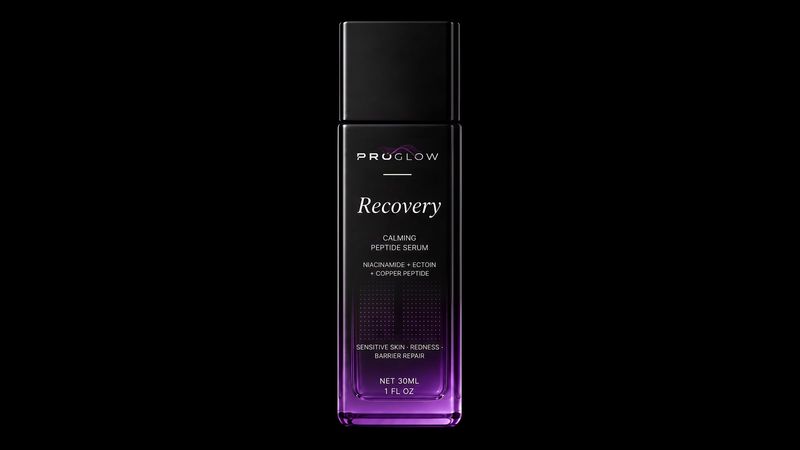
ProGlow Recovery is our ready-to-use KPV serum. It pairs KPV with copper peptide (GHK-Cu), 5% niacinamide, and 3% ectoin in a lightweight formula made for skin prone to redness.
This guide covers what KPV does, how to tell finished skincare from research powder, how a KPV cream differs from a KPV serum, and what to check before you buy.
What KPV Does for Skin
KPV is a tripeptide, a chain of three amino acids: lysine (K), proline (P), and valine (V). It is a fragment of alpha-MSH, a hormone your body makes that plays a part in how skin responds to stress.
In skincare, KPV is used to help calm the look of redness and irritation. That is why it shows up in formulas built for sensitive, reactive skin. With consistent use in a well-made formula, you can expect:
Calmer-looking skin: less visible redness over several weeks.
A more even-looking tone: redness that fades back makes tone look more uniform.
More comfort: skin that feels less tight and reactive, especially when KPV is paired with soothing and barrier-support ingredients.
Why Ready-Made KPV Skincare Is Hard to Find
If you have gone looking for a KPV cream and come up short, you are not imagining it. A few things make it hard:
KPV is new to cosmetics. Peptides like Matrixyl, argireline, and copper peptide (GHK-Cu) have been in skincare for years. Far fewer brands have built a formula around KPV.
It is often not named. When KPV is in a formula, it may sit inside a "calming peptide complex" rather than being called out by name, which makes it hard to shop for.
It is mostly sold online. You are unlikely to find KPV skincare at the drugstore. Most of it is sold direct from the brand's own website.
You may also see KPV creams prepared by compounding pharmacies. Those are prescribed by a healthcare provider and are a separate route from cosmetic skincare. This guide focuses on finished cosmetic products you can buy without a prescription.
Finished KPV Cream or Serum vs Research-Grade KPV Powder
These are two different products that share a name.
| Finished KPV cream or serum | Research-grade KPV powder | |
|---|---|---|
| What it is | A complete skincare formula with KPV at a set strength | Freeze-dried (lyophilized) peptide powder in a vial |
| Made for | Use on skin | Lab research. Usually labeled "not for human use" |
| What else is in it | A preserved, skin-friendly base plus supporting actives | Nothing. Just the peptide |
| Directions | How much, when, and how often to apply | None for skin |
| Label | Ingredient list, net size, brand and contact details | Purity and batch info for researchers |
| Ready to use? | Yes | No. It would need to be mixed, and that is where things go wrong |
Research powder is not a cheaper shortcut to KPV skincare. Mixing it into a cream at home means guessing the strength, skipping the pH balance and preservative system a real formula needs, and risking contamination once a peptide sits in water without a preservative. If you want KPV on your skin, buy a product made for skin.
KPV Cream vs KPV Serum
Both can carry KPV. The difference is texture, which skin they suit, and where they go in your routine.
| KPV serum | KPV cream | |
|---|---|---|
| Texture | Lightweight, usually water-based, absorbs fast | Richer emulsion with oils or butters |
| Best for | Oily, combination, normal, and redness-prone skin that dislikes heavy textures | Dry or barrier-stressed skin that wants more cushion |
| Routine step | After cleansing, before moisturizer | The last step, or on top of a serum |
| Main job | Delivers concentrated actives | Seals in moisture, with some actives |
Which should you choose? For most people, a KPV serum plus a moisturizer they already like works best. The serum carries the actives in a light layer, and the moisturizer seals them in. If your skin is very dry and you want a single step, a KPV cream can make sense, but there are fewer of them to choose from.
If you go the serum route and want a moisturizer to follow it, Daily Renew, our peptide moisturizer with ceramides, layers well over Recovery.
What to Look for When Buying KPV Skincare
Run any KPV cream or serum through this checklist before you buy.
KPV is named. The product page or ingredient info calls out KPV by name, not just "calming peptides" or a "peptide complex".
Supporting actives. KPV works best alongside proven calming and barrier ingredients such as niacinamide, ectoin, panthenol, allantoin, ceramides, or copper peptide (GHK-Cu).
Clear brand and support info. A real company name, a support email that gets answered, and clear shipping and returns details.
ProGlow Recovery: A Ready-to-Use KPV Serum
Recovery Calming Peptide Serum is built around two peptides with two jobs: KPV for the look of redness, and copper peptide for the look of recovery. It is an evening serum for redness-prone, sensitive, and reactive skin.
Key actives:
KPV peptide: a calming tripeptide (lysine, proline, valine) that helps soften the look of redness and irritation.
Copper peptide (GHK-Cu): supports the look of skin recovery and resilience.
Niacinamide (5%): supports a stronger-looking barrier and a more even-looking tone.
Ectoin (3%): helps protect skin from everyday stressors like wind, pollution, and temperature swings.
Panthenol (2%) and allantoin: soothing support for skin that feels tight or reactive.
Formula facts:
Lightweight, oil-free, and silicone-free. It absorbs fast and sits cleanly under moisturizer.
Made without parabens, sulfates, mineral oil, drying alcohols, added dyes, formaldehyde-releasers, and PEGs.
Contains a light fragrance. If fragrance usually bothers your skin, patch test before full use.
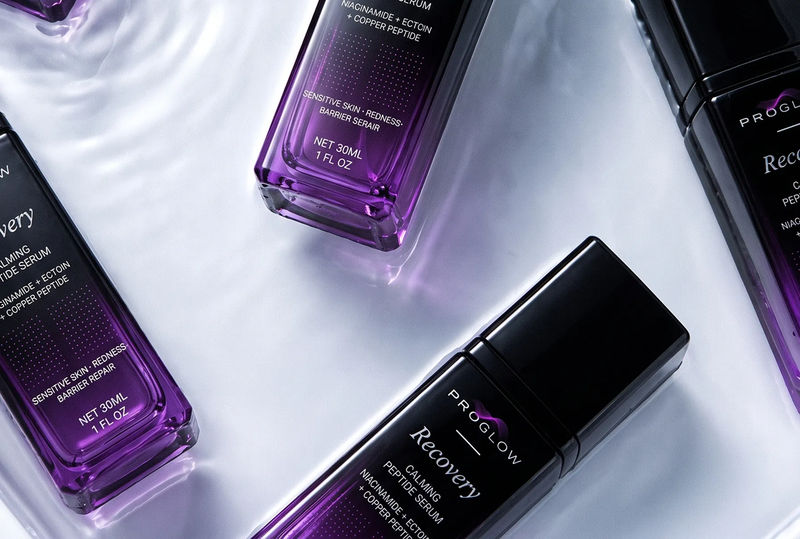
30ml / 1 fl oz in a tinted purple glass bottle with a pump. $82.
How to Use Recovery
Evening, after cleansing: apply 2 to 3 drops to clean, dry skin on your face and neck.
Follow with moisturizer to seal it in.
In the morning: finish with a broad-spectrum SPF. If you use a vitamin C serum such as Daily Lift, keep it in your morning routine and Recovery at night, so vitamin C and copper peptide stay in separate routines.
New to actives or very reactive? Start every other night for the first week, then move to nightly.
What to Expect: A Realistic Timeline
First nights: skin feels more comfortable, with less of that tight, reactive feeling.
Weeks 2 to 4: skin looks more settled, and the barrier starts to look stronger against daily stressors.
Weeks 4 to 8: redness looks visibly calmer and tone looks more even.
After 8 weeks: keep up nightly use to maintain a calmer, more resilient look.
Consistency matters more than amount. A few drops every night will do more than a heavy layer a couple of times a week.
Pair It With the Calming Face Mask
The Calming Repair + Restore Mask brings the same calming focus to a sheet mask, with KPV and copper peptide (GHK-Cu). Use it 2 to 3 times a week: leave it on for 20 to 30 minutes, then press the leftover essence into your skin and follow with moisturizer. It is an easy add on nights when skin feels stressed after sun, wind, or a long day.
Where to Buy Recovery
Recovery is sold direct at proglowlabs.com and ships from the US. Orders placed before 12 pm PT on a business day usually ship the same day, and shipping is free on orders over $100 (Recovery plus two calming masks gets you there).
Want to compare options? Browse the full peptide serums collection.
KPV for Skin Prone to Redness
Skin prone to redness tends to flush with heat, wind, cold, spicy food, stress, or a new product. It often stings when you apply actives, and it can stay pink after retinoids or exfoliating acids.
KPV fits here because it helps calm the look of redness, and it works best inside a routine that also protects the barrier. A few habits make a bigger difference than any single product:
Keep the routine short. Cleanser, a calming serum, moisturizer, and SPF is plenty.
Add one new product at a time, and give it two weeks before adding another, so you know what your skin is reacting to.
Wear SPF every day. Sun exposure is one of the most common reasons redness looks worse.
Go easy on exfoliation. If skin stings or stays pink, cut back on acids and scrubs.
Use lukewarm water, not hot, when you cleanse.
When to see a dermatologist: if redness does not fade, comes with burning, bumps, or visible blood vessels, affects your eyes, or you have a diagnosed skin condition, see a dermatologist. KPV skincare can help with the look of redness. It is a cosmetic, not a treatment for rosacea or any other skin condition.
FAQ
Where can I buy KPV peptide cream or serum?
Ready-to-use KPV skincare is sold by a small number of skincare brands like ProGlow Labs, mostly direct from their own websites. Look for a product page that names KPV, lists key ingredients, and gives directions and support contact details. ProGlow Recovery is a KPV serum sold at proglowlabs.com.
Is a KPV serum better than a KPV cream?
Neither is better across the board. A serum is lighter and suits oily, combination, and redness-prone skin, and it layers under any moisturizer. A cream is richer and suits dry skin. Most people get the best results from a KPV serum followed by a moisturizer.
Can I use research-grade KPV powder on my skin?
No. Research-grade KPV is sold for lab use and is usually labeled "not for human use". It has no base, preservative, or directions, and mixing it at home means guessing the strength and risking contamination. Choose a finished skincare product instead.
How long does topical KPV take to work?
Skin often feels more comfortable within the first few nights. Visible changes take longer: most people see redness look calmer over 4 to 8 weeks of consistent nightly use.
Can I use a KPV serum with retinol, vitamin C, or niacinamide?
Yes. Many people use a KPV serum on nights they skip retinol or acids, or apply it afterward if their skin tolerates it. Keep vitamin C in the morning and a copper peptide serum like Recovery at night. Niacinamide pairs well with KPV, and Recovery already contains 5%.
Is KPV good for sensitive skin?
KPV is used in formulas made for sensitive, reactive skin, but any product can irritate someone. Patch test first. Recovery contains a light fragrance, so take extra care if fragrance usually bothers you.
Can I use KPV skincare if I have rosacea?
Talk to your dermatologist first. KPV skincare is cosmetic: it can help the look of redness, but it is not a treatment for rosacea or any other skin condition.
Do I need a prescription for a KPV topical serum?
Not for a cosmetic KPV serum like Recovery. Compounded KPV creams made by pharmacies are a separate, prescription-only route.
Does ProGlow Recovery contain KPV?
Yes. Recovery contains KPV and copper peptide (GHK-Cu), with 5% niacinamide, 3% ectoin, 2% panthenol, and allantoin.
Ready to try KPV? Shop Recovery Calming Peptide Serum, add the Calming Repair + Restore Mask for stressed-skin nights, or browse all peptide serums.