
Copper Peptides for Skin: What They Do and How to Use Them
What copper peptides do for skin, how to add them to your routine, what not to mix them with, and how long they take to work.
Copper peptides are one of the most talked-about ingredients in skincare right now, and for good reason. They help skin look firmer, smoother, and bouncier, they are gentle enough for daily use, and they play well with almost everything else in your routine.
Here is what copper peptides do for your skin, how to use them, and what to keep them away from.
What Are Copper Peptides?
Copper peptides are tiny protein fragments (peptides) bound to copper. The one used in skincare is made of three amino acids, glycine, histidine, and lysine, and shows up on ingredient lists as copper tripeptide-1.
Your skin already knows this ingredient. Your body makes it naturally, but levels drop as you age, from about 200 ng/mL at 20 to about 80 ng/mL by 60 (Pickart and Margolina, 2018). Putting it back on your skin is the idea behind copper peptide serums.
New to peptides in general? Start with how peptides work in skincare, then come back.
What Do Copper Peptides Do for Your Skin?
Copper peptides act like messengers. They tell your skin to support its own collagen and elastin, the proteins that keep skin firm and springy. With regular use, you can expect:
Firmer, bouncier-looking skin. The main reason copper peptides sit in so many anti-aging formulas.
Softer-looking fine lines. Lines and wrinkles look smoother over time.
A more resilient look. Skin that looks like it bounces back faster after stress, sun, or a long week.
Better texture. Skin feels smoother and looks more refined.
A more even, healthy-looking glow. Tone looks clearer and more uniform.
Are Copper Peptides Really Good for Your Skin?
Yes, for most people. Copper peptides are one of the most studied peptides in skincare, with research going back to the 1970s, and they are known for being gentle. Most skin types, including sensitive skin, use them without trouble.
To keep expectations real, here is what copper peptides won't do:
They won't lift skin like a facelift or a filler.
They won't work overnight. Think weeks, not days.
They won't replace sunscreen. SPF protects the results you are building.
Think of copper peptides as a steady, everyday ingredient that makes skin look healthier and firmer over time.
How to Use Copper Peptides: A Simple Routine
Copper peptides are easy to add to any routine. Apply them after cleansing and before moisturizer, morning, night, or both. Here is how we build it with ProGlow:
Cleanse. Start with a gentle cleanser and pat skin dry.
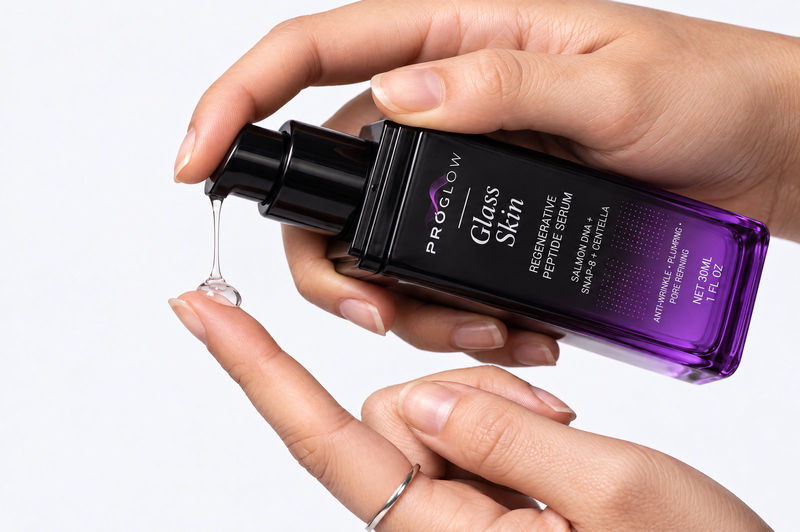
Apply a copper peptide serum. Press 2 to 3 drops onto your face and neck. For fine lines and plumpness, morning and night, use Glass Skin, with copper peptide, SNAP-8, and PDRN (salmon DNA). For sensitive or redness-prone skin, at night, use Recovery, with copper peptide, KPV, 5% niacinamide, and 3% ectoin.
Treat your eye area. Tap a small amount of Bright Eye around the eyes with your ring finger. It pairs copper peptide with caffeine and a 6-peptide complex.
Moisturize. Seal everything in with Daily Renew, our 5-peptide cream with copper peptide, snail mucin, and ceramides.
Morning only: SPF. Finish with a broad-spectrum sunscreen every day.
2 to 3 times a week: mask. After cleansing, apply the Firm + Sculpt Contour Mask for 20 to 30 minutes, press in the leftover essence, then moisturize.
New to actives? Patch test first on your inner arm, then start once a day and build up.
How Long Do Copper Peptides Take to Work?
Give copper peptides time. Most people notice:
Weeks 1 to 2: skin feels smoother and more hydrated.
Weeks 4 to 8: skin looks firmer, bouncier, and more even.
Weeks 8 to 12: fine lines look visibly softer.
Consistency matters more than amount. A few drops every day beats a thick layer once in a while.
What Should You Not Mix Copper Peptides With?
Copper peptides get along with most ingredients. Just keep these apart:
Vitamin C serums (as separate products). Copper can make vitamin C break down faster. Use vitamin C in the morning and copper peptides at night. A formula that already combines both, like Daily Lift, is made to work together, so use it as directed.
Strong exfoliating acids (AHAs and BHAs). Use glycolic or salicylic acid on different nights.
Benzoyl peroxide. Use it at a different time of day.
What copper peptides pair well with: hyaluronic acid, niacinamide, ceramides, other peptides like SNAP-8 and Matrixyl, and retinol.
Which Is Better, Retinol or Copper Peptides?
They do different jobs, and for many people copper peptides are the easier everyday choice. Copper peptides support a firmer, more resilient look with little to no irritation, and you can use them morning and night. Retinol is strong on rough texture, but it often causes dryness, peeling, and sun sensitivity.
You can also use both. Try retinol on some nights and copper peptides on the others, or layer them: retinol first, then copper peptide, then moisturizer.
What Are the Downsides of Copper Peptides?
There are very few. The ones to know:
Mild tingling or redness in some people, often from other ingredients in the formula.
Overdoing it. Some people online report dull or rough skin (nicknamed "copper uglies") after piling on very high-strength copper products. Stick to one or two well-made products used as directed.
Mixing mistakes. Most problems come from pairing copper peptides with strong acids or separate vitamin C at the same time.
Patch test any new product, and stop using it if your skin stings or stays red.
ProGlow Copper Peptide Picks
Copper peptide is in most of our skincare line, each time paired with ingredients for a different goal:
| Product | Paired with | Best for | When |
|---|---|---|---|
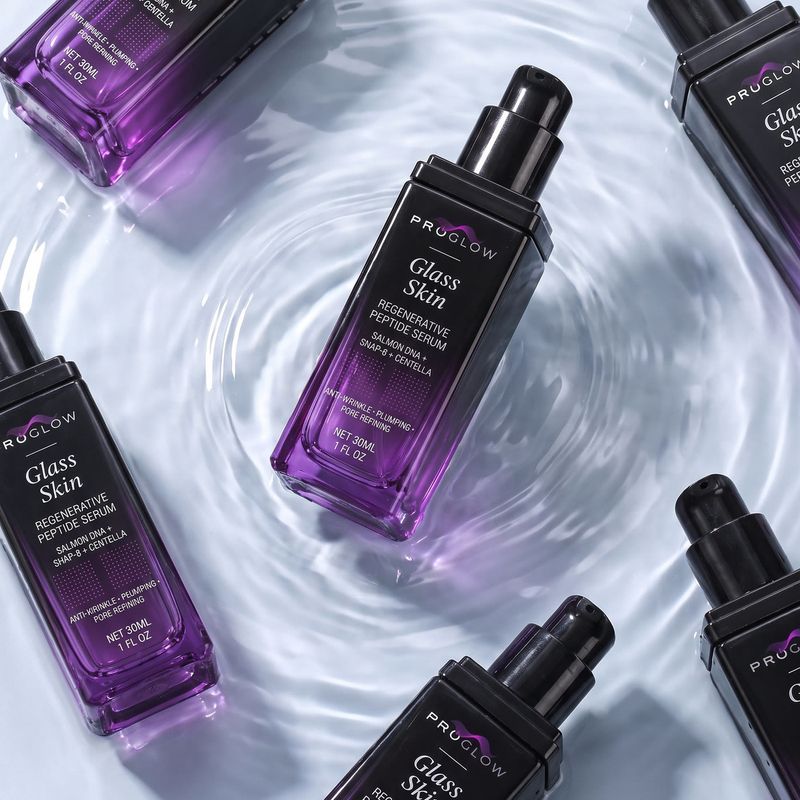
| Glass Skin | SNAP-8, PDRN (salmon DNA), nonapeptide-1 | Fine lines, plumpness, pores | AM and PM |
| Recovery | KPV, 5% niacinamide, 3% ectoin, 2% panthenol | Sensitive, redness-prone skin | PM |
| Daily Lift | 2% bakuchiol, 3% stabilized vitamin C, 4% niacinamide | Fine lines, dark spots, brightness | AM and PM |
| Daily Renew | 15% snail mucin, Matrixyl Synthe'6, SNAP-8, ceramides | Dry skin, firmness | AM and PM, last step |
| Bright Eye | 1% caffeine, 2% tranexamic acid, 6-peptide complex | Dark circles, puffiness | AM and PM |
| Lip Renew | Snail mucin, SNAP-8, Matrixyl, ceramide | Dry lips, a plumper look | As needed |
Want to learn more about peptides in general? Read our peptide serum guide.
FAQ
What do copper peptides do for your skin?
Copper peptides help skin look firmer, smoother, and bouncier by supporting its own collagen and elastin. With daily use, fine lines look softer and skin looks more resilient.
Can I use copper peptides every day?
Yes. Copper peptides are gentle enough for daily use, morning and night. Start once a day if you are new to actives, then build up.
Should I use copper peptides in the morning or at night?
Either works. If you use a separate vitamin C serum in the morning, put copper peptides in your night routine.
Can I use copper peptides with niacinamide?
Yes. They pair well, and many formulas combine them. ProGlow Recovery contains copper peptide with 5% niacinamide.
Are copper peptides good for sensitive skin?
Usually, yes. Copper peptides are known for being gentle, and they are often paired with calming ingredients. Recovery was made for sensitive, redness-prone skin. Patch test first.
Ready to try copper peptides? Start with Glass Skin for fine lines and plumpness, or Recovery for calm, comfortable skin. Or browse all peptide serums.

