Hollow Under Eyes vs Bags: How to Tell the Difference
Hollow under eyes vs bags: how to tell which you have, why they differ, and what a good eye-area routine can and can't do.
ProGlow Team4 min read

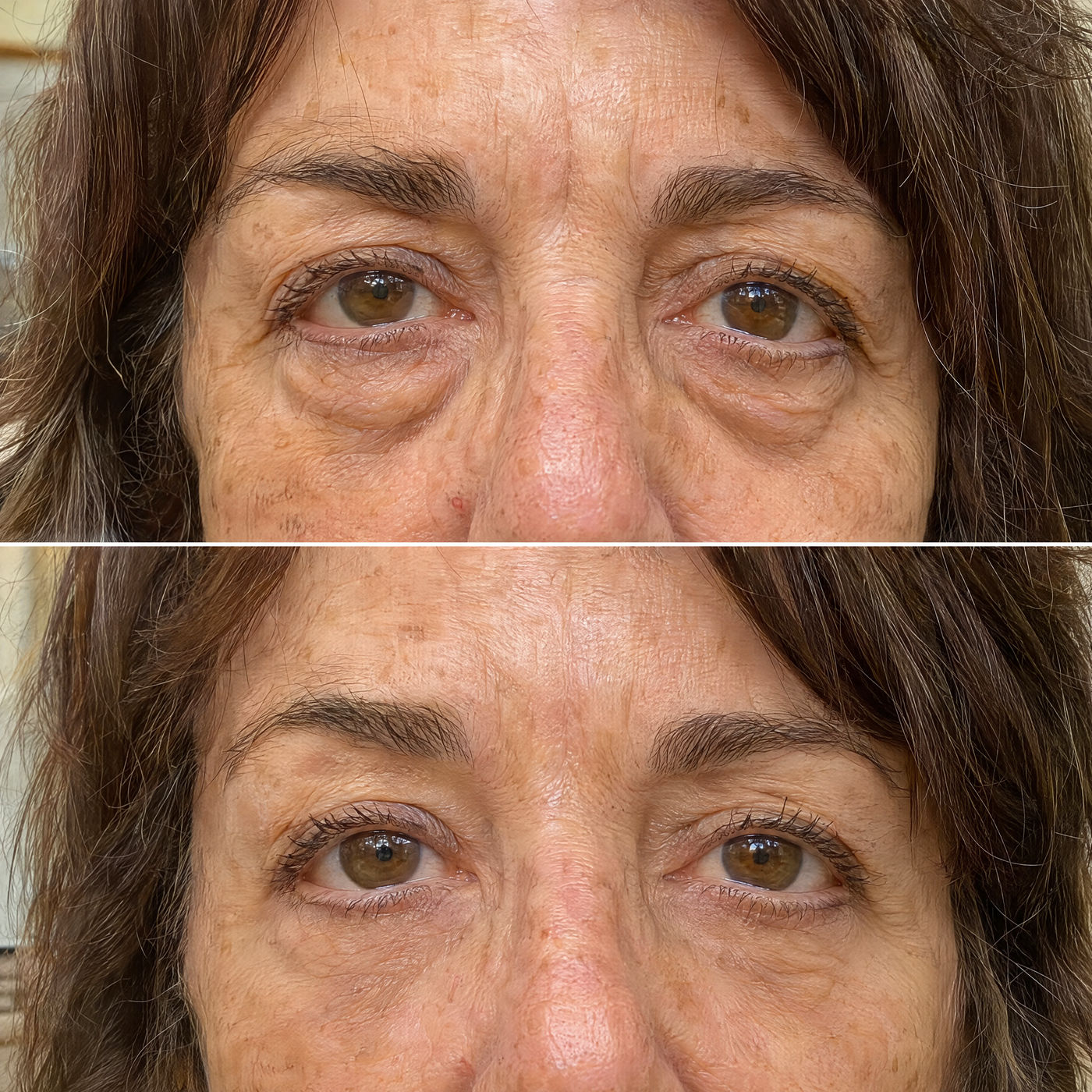
A bag is a soft bulge that sticks out below the eye. A hollow is a dip or groove that sits in, and it often casts a shadow that makes you look tired. If the area looks fuller, think bag. If it looks flatter or sunken, think hollow. You can have both at once.
How can I tell which one I have?
Run a fingertip gently across the lower lid. A bag feels like a raised, rounded ridge. A hollow feels like a shallow channel between the lower lid and the cheek.
Two quick checks help you describe what you see. They are a guide, not a diagnosis.
The light test.
Look in the mirror under an overhead light, then face a window or lamp at eye level. A shadow that softens under light from the front points to contour, meaning a hollow. Darkness that stays put points to pigment or visible vessels instead.
The stretch test.
With a clean fingertip, gently pull the skin below the eye taut. If the darkness fades, shadow is likely playing a part. If it does not, colour in the skin may be the cause.
| Bag | Hollow | Dark circle | |
|---|---|---|---|
| Shape | Bulge, sticks out | Dip or groove, sits in | Usually flat |
| What you notice | Puffiness | A shadow line | Discolouration |
| Overhead light | Bulge casts a small shadow below it | Shadow deepens | Little change |
| Light from the front | Bulge remains | Shadow softens | Colour remains |
Scroll sideways →
Bags and hollows have different causes
Under the lower lid, fat sits in compartments held in place by a thin layer of tissue. When that fat pushes forward, you see a bag. Researchers describe protruding orbital fat as the cause of lower lid bags.
A hollow is a loss of fullness along the tear trough, the groove between the lower lid and the cheek. EyeWiki, the American Academy of Ophthalmology's reference, describes a sunken area there, with thin skin and little fat beneath. It has several contributing factors and tends to become more visible with age. A cadaver study found that along the tear trough the muscle attaches directly to bone.
That is structure beneath the skin, not something on its surface.
You can have both
It is common. EyeWiki says tear trough hollows may come with bags from prolapsed fat. A bag right above a hollow makes both look more pronounced, because the bulge casts a shadow into the dip below.
Often it is a shadow, not a stain
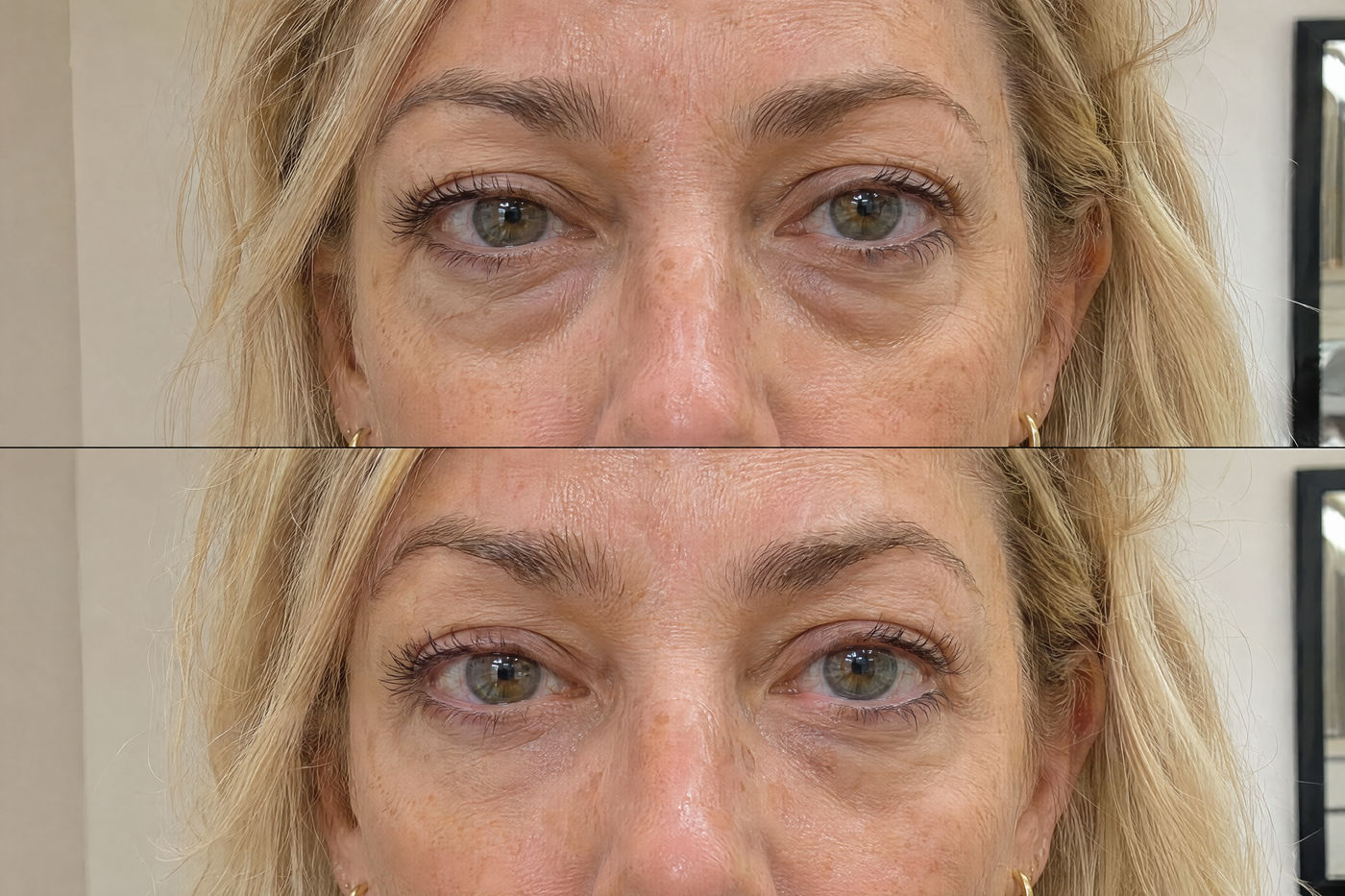
The dark look under the eyes has many possible causes: genetics, pigment, fluid, visible vessels, and shadowing from skin laxity and the tear trough as we age. A 2016 review of dark circles likewise describes deeper anatomy, soft tissue changes and the skin itself all contributing.
Some changes come and go
Sleep, hydration and weight changes are often listed as contributors to hollows, so a hollow can look better or worse from week to week. Underlying structure and genetics stay the same from one night to the next.
Puffiness that comes and goes is a different pattern from a bulge that is always there. Check the area morning and evening for a couple of weeks to see which you have.
A good eye-area routine looks after the skin itself
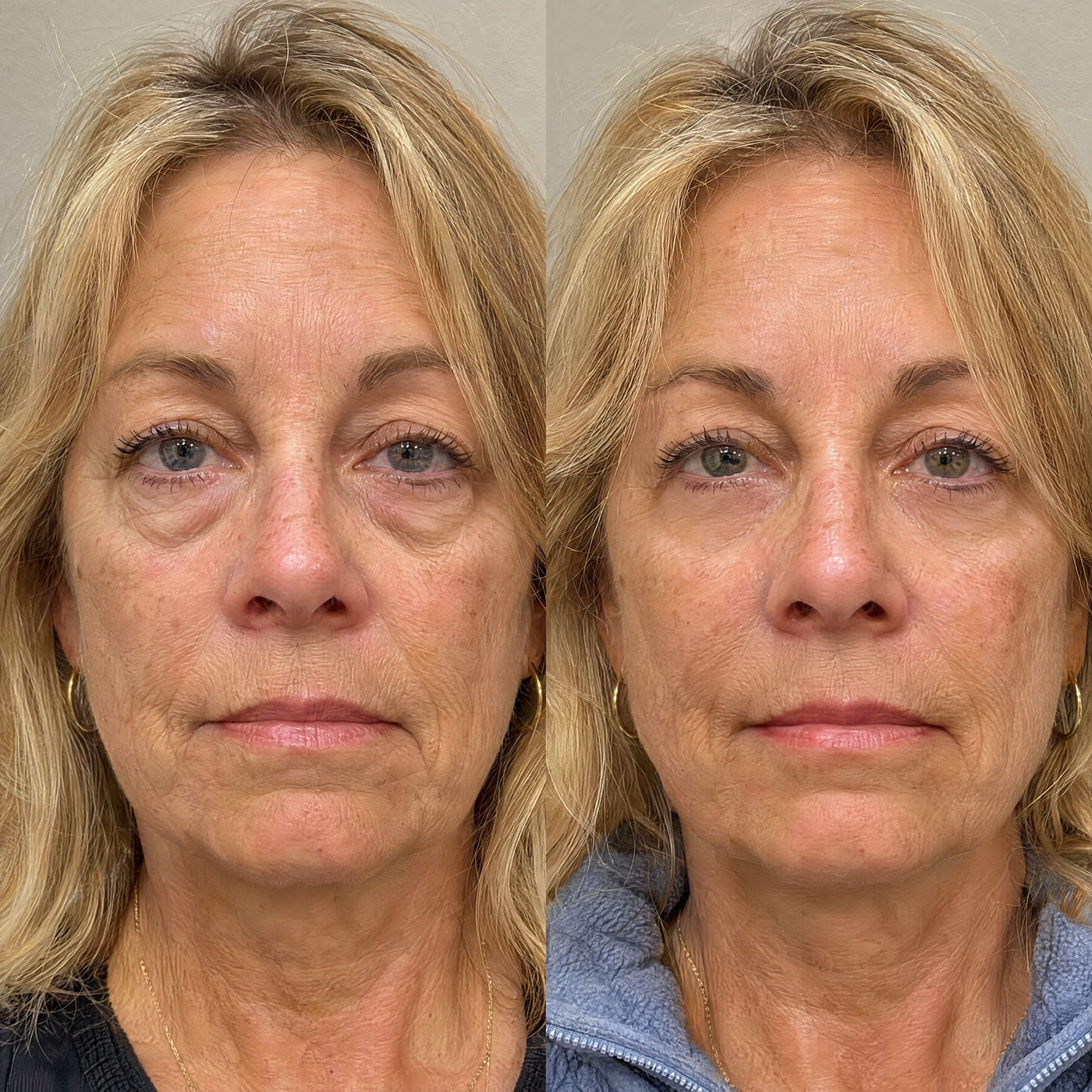
Skincare works on the skin's surface, so it is not what changes a bag or a hollow. Those come down to structure. What a routine does well is look after the skin itself, and under the eyes that skin is thin.
Hydration. A well-moisturised eye area looks and feels more comfortable and smoother.
Gentle care. Mild cleansing and light, non-irritating products keep delicate skin in good condition.
Daily sun protection. Sunscreen and sunglasses protect the skin around the eyes every day.
Peptide-based eye products. ProGlow's Peptide Eye Treatment is one example of a peptide eye product that fits into a daily routine.

Makeup and cosmeceuticals are the least invasive options listed in the dark-circle literature, and concealer is a practical way to soften the look of shadow.
Full disclosure: ProGlow makes the peptide eye treatment mentioned above, so we have a stake here.

When should I ask a professional?
If a hollow or bag bothers you, a dermatologist or other qualified clinician can tell you what is going on and which options exist. Swelling that is sudden, painful, red or only on one side should be checked promptly.
Final thoughts
A bag bulges, a hollow dips, and you can have both. Tonight, try the light test in the mirror and write down what you see.
If it still bothers you, take those notes to a dermatologist.