Can You Use Peptides With Retinol? How to Layer Them Safely
Can you use peptides with retinol? Yes. Learn the order to apply them, a weekly schedule, and how to ease in retinol without irritation.
ProGlow Team5 min read
Yes. Peptides and retinol fit into the same routine, and serums that combine the two are on the market. Use retinol at night, peptides morning, night or both, and introduce retinol slowly. Most of the care in this routine goes into easing in the retinol, so the schedule below focuses on that.

Do peptides cancel out retinol?
No. They are different ingredients with different jobs, and no known interaction stops them working in the same routine.
Retinol is a vitamin A derivative, usually used at night for the look of uneven texture and fine lines. Cosmetic peptides are short chains of amino acids used in skin-supportive routines for the look of firmness, hydration and comfort.
That split is why they pair so easily.
Retinol is the active you ease in. Peptides are the supportive layer you can use every day, alongside it. Small studies of serums that combine retinol with peptides have reported good tolerability.
Which goes first, peptides or retinol?
Peptide serum first, retinol second, moisturizer last.
Order is a matter of convention, and this is a common one. Water-light serums go on before richer products, so the routine runs thin to thick. If your peptide product is a cream, put it after retinol instead. If a product's label gives its own directions, follow the label.
If your skin tolerates retinol well, either order is fine. If your skin is reactive, order matters far less than how often you use retinol and how well you moisturize. The next two sections cover both.
A week with both: peptides daily, retinol two nights
Start retinol two nights a week, then move to every other night if your skin stays comfortable. Peptides can go on every day. Sunscreen is part of the plan: retinol makes skin more sun-sensitive, so use SPF every morning.

| Day | Morning | Evening |
|---|---|---|
| Retinol night (start with 2 per week) | Cleanser, peptide serum, moisturizer, SPF | Cleanser, wait until skin is dry, peptide serum, retinol, moisturizer |
| Recovery night (all other nights) | Cleanser, peptide serum, moisturizer, SPF | Cleanser, peptide serum, moisturizer |
Scroll sideways →
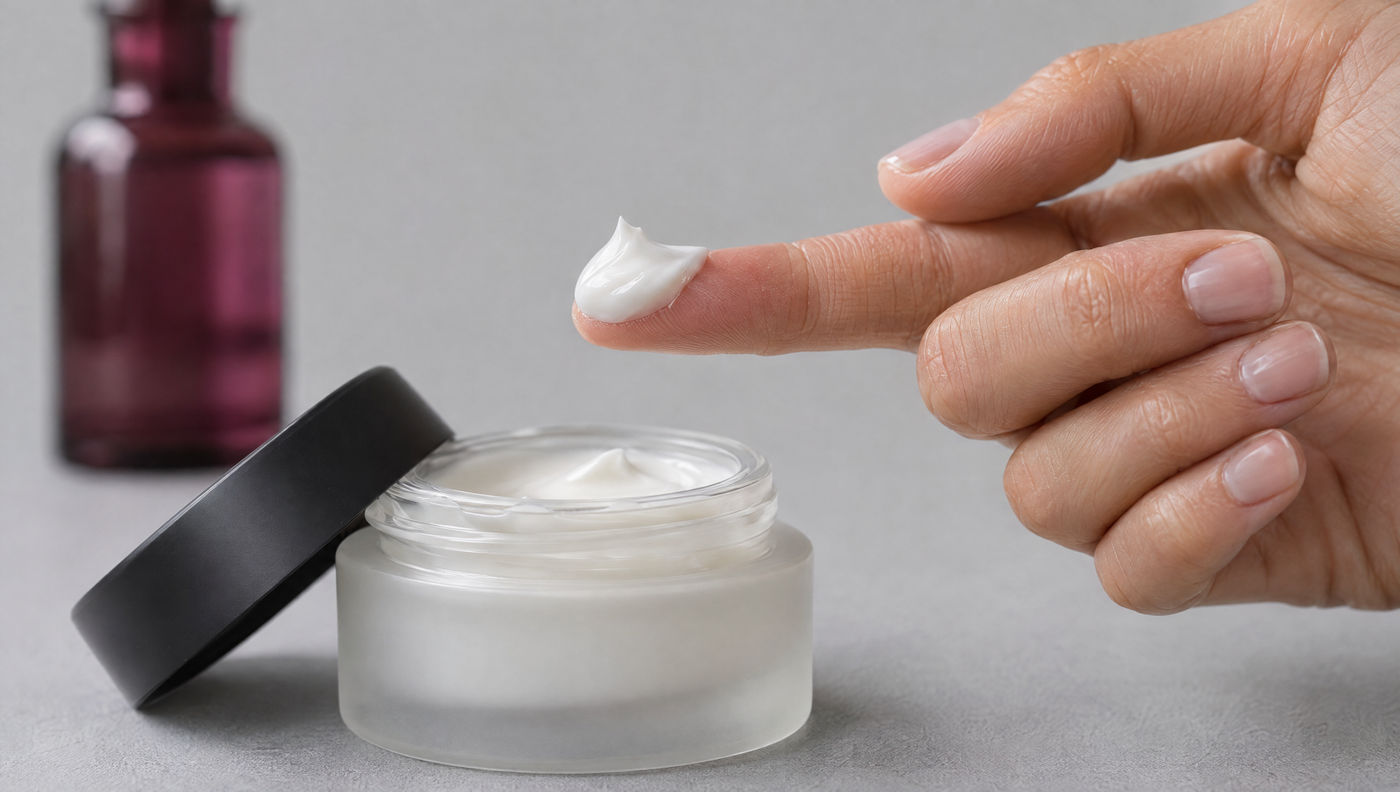
Dermatology guidance, including the American Academy of Dermatology and Cleveland Clinic, is to apply retinol to clean, dry skin, wait 20 to 30 minutes after washing, and begin with a pea-sized amount every other night.
Patch test any new product on a small area first.
When to step up: after a few weeks of comfortable retinol nights, move from two nights a week to every other night. If skin feels tight or looks red at any point, drop back to the previous step for a week.
Where peptides fit: they stay the same on every day of the schedule. A peptide serum goes on right after cleansing, and a moisturizer seals the routine in. That makes the retinol nights the only moving part, which keeps the whole routine easy to track.
Full disclosure: ProGlow makes peptide serums, including the one below, so we have a stake here. The routine works the same with any peptide serum you like.
If your skin gets irritated, adjust the retinol first
Retinol can cause stinging, tightness, redness and flaking while skin adjusts. Retinoid irritation is dose-dependent and linked to a disrupted skin barrier, so frequency is the main lever. Early reactions tend to show up in the first week, and skin often adapts over three to four weeks. Treat that as a rough guide to going slowly.
The basics that keep a retinol routine comfortable:
Use retinol less often, not more.
Put a plain, fragrance-free moisturizer on after retinol.
Skip a retinol night when skin feels tight or stings.
Pause retinol if you see persistent redness or peeling, and restart only once skin feels normal.
Your peptide serum and moisturizer stay in the routine on those nights. They keep the rest of your skincare simple and comfortable while retinol takes a break.
What else can go in the same routine?
Once retinol is settled, most people ask about the rest of the shelf. Here is a common way to arrange it:
Vitamin C: morning, so it never shares a step with retinol.
Niacinamide: generally used in either slot.
Exfoliating acids and benzoyl peroxide: keep them off retinol nights.
Copper peptides: these have their own layering notes. See can you use copper peptides with retinol.
Add one new product at a time, a week or two apart, so you can tell what caused a reaction.
Who should check with a professional first?
If you use a prescription retinoid, ask your prescriber before adding anything to it. The same goes if you are pregnant or breastfeeding, or have eczema, rosacea or another skin condition, since retinol guidance changes in those cases. This article covers cosmetic routines only.
Quick questions
Do I need both?
No. Retinol plus moisturizer plus sunscreen is a complete, simple base. Peptides are a daily add-on for people who want a supportive hydration step in the routine.
How long should I wait between steps?
Wait 20 to 30 minutes after washing before retinol, per the dermatology guidance above. Between serum and retinol, a minute or two for the serum to settle is enough.
Can I use peptides every day?
Yes. Peptide products are typically designed for daily use, morning and evening, including on retinol nights. Follow the directions on your specific product.
Final thoughts
Peptide serum, then retinol, then moisturizer. Retinol two nights a week to start, peptides and SPF every day. Add one product at a time and go at your skin's pace.
Pick your two retinol nights this week and keep everything else the same.